

Your website isn't an asset anymore. If it was built more than 5 years ago, it's likely become a liability—quietly costing you customers, rankings, and revenue every single day.
I know that sounds dramatic. But after analyzing hundreds of business websites, the pattern is clear: websites built before 2020 are now actively working against the businesses they're supposed to serve.
Websites Have Expiration Dates
Think of your website like a car. A 2015 model still runs, but it lacks modern safety features, gets worse fuel economy, and doesn't have the technology drivers now expect.
Here's how the web has changed since 2020:
- Mobile-first became mandatory: Google now indexes and ranks the mobile version of your site, not desktop
- Speed expectations increased: Users expect pages in 2-3 seconds; anything slower feels broken
- Core Web Vitals became ranking factors: Google now measures actual user experience
- AI search emerged: ChatGPT, Perplexity, and Google AI now answer queries directly
- Security requirements tightened: HTTPS is expected; HTTP sites show scary warnings
A website that was "fine" in 2019 fails multiple criteria that matter in 2026.
5 Warning Signs Your Website is a Liability
1. It Loads Slowly (Even If You Think It Doesn't)
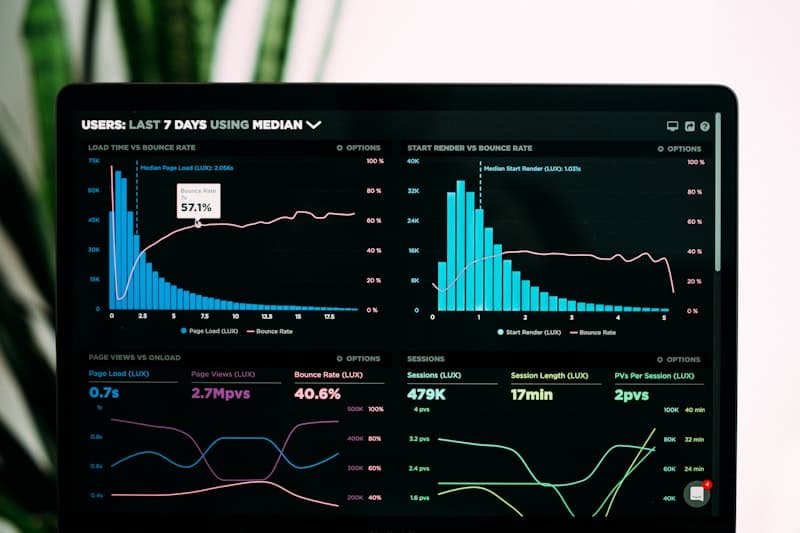
Run your site through Google PageSpeed Insights. If your mobile score is below 50, you have a problem.
53% of mobile users abandon sites that take longer than 3 seconds to load. Every second of delay reduces conversions by 7%.
2. It's Not Responsive (Really Responsive)
Being "mobile-friendly" isn't enough anymore. Pull up your site on your phone. Is text easy to read without zooming? Are buttons easy to tap? Does the navigation work smoothly?
Over 60% of web traffic is mobile. If your mobile experience is merely "acceptable," you're losing customers.
3. Your Content is Invisible to AI
Try this: Ask ChatGPT or Perplexity about your business category in your area. Are you mentioned? If not, AI-powered search tools can't recommend you.
This matters because over 40% of product and service searches now happen through AI tools, not just Google.
4. You Can't Update It Easily
When was the last time you updated your website content? If the answer is "I'd have to call my web developer," that's a problem.
Fresh content signals relevance to search engines. Outdated content signals a business that might not be active.
5. It Doesn't Generate Leads Consistently
Your website should be your best salesperson—working 24/7, qualifying prospects, capturing contact information. If you're not getting at least a few quality leads per week from your site, something's broken.
The Hidden Costs of an Outdated Website
The real cost isn't what you see—it's what you don't see:
- Lost search rankings: Google actively demotes slow, non-mobile-optimized sites
- Missed leads: Visitors who bounce immediately because the site feels outdated
- Reputation damage: Your website is often the first impression—what does yours say?
- Wasted ad spend: If you're running ads to a slow, confusing website, you're burning money
- AI invisibility: Missing out on the growing segment searching via AI tools
One client came to us spending $3,000/month on Google Ads with a 1% conversion rate. After rebuilding their site (and keeping the same ad spend), conversions jumped to 4.5%. Same traffic, 4.5x more customers.
The AI Search Problem
Here's what most businesses haven't realized yet: AI search is fundamentally different from Google search.
When someone asks ChatGPT "Who's the best plumber in [city]?", it doesn't show 10 links. It gives a direct recommendation, often with an explanation of why.
AI tools synthesize information from across the web. If your website is:
- Slow (AI crawlers skip slow sites)
- Missing structured data (AI can't understand unstructured content)
- Thin on quality content (nothing to recommend you for)
- Not mentioned elsewhere (no signals of authority)
...then you simply don't exist in AI search. Period.
This is why we now offer Generative Engine Optimization (GEO) as a service—because traditional SEO alone is no longer enough.
What a 2026 Website Should Look Like
A modern business website should meet these benchmarks:
- Speed: Under 3 seconds to load on mobile (under 2 is ideal)
- Mobile: Perfect experience on all screen sizes, not just "works"
- Security: HTTPS with current SSL certificate
- Accessibility: Usable by people with disabilities (and it helps SEO)
- AI-ready: Structured data, clear content hierarchy, comprehensive information
- Conversion-optimized: Clear CTAs, easy contact methods, lead capture
- Analytics: Tracking that shows what's working and what isn't
Your Path Forward
If you recognized your website in the warning signs above, here are your options:
Option 1: Patch and Hope
Add some speed optimizations, update content, hope for the best. This can work if your site is relatively recent (post-2021) and just needs refreshing.
Option 2: Rebuild Right
Start fresh with a modern foundation. Yes, it's more investment upfront, but the ROI is clear. Our clients typically see their investment pay back within 90 days through increased leads and conversions.
The question isn't whether you can afford a new website. It's whether you can afford to keep losing customers to competitors whose websites actually work.
Ready to stop letting your website hold you back? Let's talk about what a modern website could do for your business.

Elevated AI Consulting
Sam Irizarry is the founder of Elevated AI Consulting, helping businesses grow through strategic marketing and AI-powered solutions. With 12+ years of experience, Sam specializes in local SEO, web design, AI integration, and marketing strategy.
Learn more about us →